Financial Survival Kit

What do you need to be prepared for the future financial turmoil? How can you survive?

Should I Buy Gold?

It seems like everyone is a gold bug these days, but is it the right thing for you?

What Are The Chances?

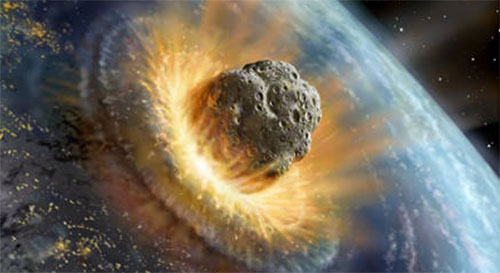
With all this "end of the world" hype going on, maybe we should consider the chances. What are the chances of a civilization threatening event?

How Much Insurance Do I Need?

Insurance is an extremely broad topic. Hopefully this generalization on the different types and amounts will help straighten things out a bit.

Iraqi Dinar: Scam or Scoop?

Some say it's an easy way to make a million bucks! But do you understand currency markets enough to take advantage?

The financial world we live in is just as wild, if not more, than the mountains and woods we walk through. We are told that the fundamentals of our economy are strong, but we can feel that something is wrong. My unique financial background and survival passion make Financial Survivalist and excellent place to learn and share.

Friday, June 24, 2016

Holy BREXIT Batman!!!

Yeah, I didn't see that coming. I should have though. We all should have. So hold on to your 401k and get the out gold from under your bed. This could be a wild ride. But what does it all mean?

The biggest consequence of a Brexit vote is risk, especially bond risk and currency risk. If the UK and leave the EU then Germany can. In fact, anyone can. If the big players in the EU leave than what is to hold it together and what is a Euro worth? I feel sorry for anyone holding Euros. I know Soros isn't, and he is a evil SOB that hits hard. I wouldn't want to trade against him. He doesn't speculate, he makes things happen.

Also, if the big guys leave the EU, why would they still bail out weak members like Greece, Italy, Spain, etc? These guys are probably hanging on only because they are members of the EU and therefore the big players have an interest in them not collapsing. However, if they leave why would they care?

Bond risk is reflected in higher interest rates. As bond rates increase, values of current bonds fall. The owners of about $10T in bonds with negative rates are counting on rates to continue to go down. If rates start to increase their bonds will become worthless very quickly. Most bond holders could just hold the bond till it matures. However, with a negative interest rate that is a losing proposition. These guys lose either way. If they panic it could cause the bond market to crash.

Is the sky going to fall? No. The U.S. still have a flight to security and I imagine that our short term pain will be minimal compared to Europe. Our stock market will probably suffer, Gold will go up, and our currency will get stronger. Rates? Who knows? All the money that MIGHT leave EU bonds has to go somewhere and generally it is stocks or cash. However, there is always US bonds. It is possible that demand for U.S. bonds could increase. Still, the biggest threat is that of a continuously stronger dollar which makes U.S. products more expensive to other countries. But junk from China gets even cheaper for us... so its a double edge sword.

So hold your breath and jump, or stick your arms in the air and scream. Either way, it will be crazy. Or not.

Enter your email for: How To Eliminate The Fed!


Delivered by FeedBurner
Subscribe to Youtube! Become a Fan! Follow Me on Twitter

Friday, January 30, 2015

Why Hyperinflation is not a Danger

Every day someone is on the radio or cable news talking about how there is going to be hyperinflation. Some of them profit big from this. Not that hyperinflation couldn't happen. Anything can happen. However, the dangers of hyperinflation of the US dollar is almost always exaggerated.

Many of the these so called experts refer to situations like the Vimar Republic. I myself have referred to this situation while talking about hyperinflation. I my myself have had concerns about hyperinflation. So why is hyperinflation not a danger?

According to the theory of quantity of money (the theory that most conservative, classical and Austrian economic followers refer to), an increase in money supply is equal to the increase in price level. That means price level will only increase (inflation) if you print money and will only do so at an equal level. You print money, you get inflation.

Even in the Vimar Rebublic they could not print enough cash to justify the inflation they had. The printing presses simply could not print fast enough. So how did inflation increase so fast? Expectations and currency trade my friend. Inflation started, no one had confidence in the Mark so they got out. People didn't want the Mark so they traded it for other currencies, increasing the supply of the Mark and decreasing its demand. I.e. hyper inflation.

The big question is what currency did they trade for? Well, in all inflation and hyperinflation situations since then, it has been the dollar that people want. Its the dollar that countries ban to try and prevent inflation. Its the "flight to security." Until we loose the flight to security, we will not have hyper inflation in the dollar. I don't see us losing the flight to security any time soon. In fact, the reason why we have had concerns of deflation recently is because there is such high demand for the US dollar.

Despite everything that is going on in the US, the rest of the world if far worse. The United States is the least bad of all the bad economies. It would take the entire world to do great while the US was crashing, for hyperinflation of the US dollar to be a reality. Fact of the matter is, the US economy is doing bad, so is the rest of the world, but hyperinflation of the US dollar is simply not a danger any time soon.

Enter your email for: How To Eliminate The Fed!


Delivered by FeedBurner
Subscribe to Youtube! Become a Fan! Follow Me on Twitter

Wednesday, January 28, 2015

OIL: The Black Gold

So China's demand for oil has plummeted, the supply from the United States has skyrocketed, and OPEC is trying to drive competitors out of the market by letting prices fall, and Russia. Don't get me started on Russia.

So that is why Oil prices have fallen, but why is the government so eager to prevent drilling? Obama gave subsidies for Brazilian companies to drill in the gulf, but won't renew drilling permits for U.S. companies? He proposes a ginormous wilderness expanse in Alaska, knowingly preventing drilling for known oil reserves?

The way I see it the two best reasons to "drill baby drill" are 1. economy. Lower oil prices fuels industry. 2. Energy independence from foreign entities. The only two reasons why I see not to drill are 1. Environment, but this can be protected with drilling. 2. Preserve resources for future generations. Let other people sell their oil. Then when they run out, we'll have a monopoly on it.

So why refuse to come to a solution for the Keystone Pipeline? Environment? NO. Obama's own investigation determined that the environmental risk was negligible. To preserve our oil? NO. It would make Canadian oil cheap to us and would be the best thing he could do to disincentivize domestic companies and preserve our oil.

Any idea? What is Obama's logic? Why would he do what he does? Any decent solution will be considered.
Enter your email for: How To Eliminate The Fed!


Delivered by FeedBurner
Subscribe to Youtube! Become a Fan! Follow Me on Twitter
Monday, November 24, 2014

So, I am getting my masters in economics. Let's just say I've learned a lot. I'm not negating everything I've ever said, but I definitely see things in a new light. For example, Keynes wasn't crazy. Gov't spending stimulates the economy. However, his model is based on numerous assumptions and definitely does not hold in an open economy. So what we are left with is a bunch of economic tools in our tools box, and problems that are still not clearly defined by modern economics.

With that being said there are some things that are pretty clear. Inflation is a big one. We know what causes it and it's not printing money. Well, the money supply is a factor, but not the largest. We also know how to control it and the cost to control it.

Also, sticky wages. The reason why I give Keynes any credibility is because I believe that prices are sticky (ie they take time to adjust). This is probably the most defining, but definitely not the only, difference between Austrian Economics and Keynesian Economics. I also don't believe that people act rationally, another important difference. Despite my beliefs there is ample data to support Keynesian economics, and it seems to me that Austrian Economics basically tries (stretches sometimes) to explain the differences.

Some have mentioned that maybe I've been brainwashed by my professors. Well, I'M NOT A LEMING! What the hell! Seriously? Actually my professors have been very good at presenting all sides of the argument. I even tested some of them by arguing the liberal point of view and I got squashed.

To sum everything up, calm down. There will be more financial crisis in the future, but it's not the end of the world. Do the "rulers" have everything under control? Of course not. Do they tell us all the truth? Of course not. But it's still not the end of the world.

Enter your email for: How To Eliminate The Fed!


Delivered by FeedBurner
Subscribe to Youtube! Become a Fan! Follow Me on Twitter

Thursday, January 30, 2014

Three Unintended Consequences of Minimum Wage

Lately there has been a lot of windy politicians blowing about an increase of the minimum wage. I believe 10 states are considering bills to increase the minimum wage. There is also a lot of huff about a "livable wage." Though intentions are good, no one actually considers what raising the minimum wage would actually do. Here are three unintended consequences of minimum wage.

1. Unemployment Increases

It's simple, if labor costs more then employers will purchase less of it. This doesn't mean every employer will purchase less. It just means that employers will run their business with the minimum amount of employees it can. However, the remaining employees will cost more.

2. Prices Increase

If it takes a fixed number of man hours to create a product and the cost of those man hours increases, then the cost of the product increases. A business has to make a profit or break even in order to stay in business. A business owner may absorb some of the increased cost, but realistically most of it will be passed on to the consumer in the form of higher prices. This is also known as cost push inflation.

3. Inflation Increases

IF raising the minimum wage works at all (ie more people making more money), then this means there is more money among the people that are most likely to spend it. When people suddenly have more money to spend and they spend it, this causes demand pull inflation.

In conclusion, raising the minimum wage increases unemployment and inflation. Even the people that are making more cannot buy more because everything cost more. The only situation in which it can have a different affect is if demand for labor is stronger than supply, but in that case the wage rate adjusts naturally. I'm not saying we should lower the minimum wage at all, but is increasing it really going to fix the problem? I argue no. Below is a video from Learn Liberty (a bunch of economists) explaining the affects of minimum wage.


Enter your email for: How To Eliminate The Fed!


Delivered by FeedBurner
Subscribe to Youtube! Become a Fan! Follow Me on Twitter

Wednesday, January 15, 2014

How Many Watts Do I Need?

Have you ever wondered how many watts you need? You might be considering solar panels, or you might just be shopping for an emergency generator. Either way it is important you know how many watts you need. An accurate way to see your usage is by looking at your power bill. But what if you don't want or need to replace ALL the energy you use. For example, your usage would likely be less during an emergency or power outage. I'm sure you could go without the microwave and clothes dryer for a day or two.

These were the questions I had, and I couldn't find a place to answer my questions easily. I did find some resources including Generac.com. This gave me a general idea how many watts I might need, but required I wrote everything down and changes would require... AN ERASER! So I decided to create my own worksheet to share with you guys.

The file is an Excel file, so you will need some way to open it. I have protected cells to keep you from destroying it. However, you can edit it if you know what you are doing. All blue text can be edited. Make sure to keep an eye out for hidden notes to give you pointers on how to use the worksheet. It should give you a decent idea of what size generator you need to buy. I am open to ideas to make it better, so feel free to leave a comment below and let me know what you think.

Watt Worksheet

Enter your email for: How To Eliminate The Fed!


Delivered by FeedBurner
Subscribe to Youtube! Become a Fan! Follow Me on Twitter

Thursday, December 5, 2013

Supply-Side Economics

The majority of the discussion about supply-side economics can be summed up by “trickle down.” However, many “supply-siders,” as Karl Brunner called them, would argue that there is much more to supply-side economics than that. The basic doctrine can be described as “a lower tax schedule and , especially, a lower slope of the tax schedule is a necessary and sufficient condition for economic recovery.” Such as tax policy will “increase real economic growth, eliminate inflation, and eventually lower government expenditures.” The reasoning is behind incentives to work, invest and save.
Robert Freeman goes on to specify that that tax cuts should be for those who are wealthy enough that they don’t need to spend the “windfall.” Rather that they will invest their tax savings in factories, office buildings, research and development, etc. To me, it sounds like supply side economics is the exact opposite of “redistribution” of wealth.
Robert Freeman goes on to point out that the theory is that the investment will lead to economic growth, higher employment and higher incomes, and therefore higher tax revenue for the federal government despite the cut in taxes. Anne Krueger elaborates the definition of supply-side economics to consider the measurement of success. If one refers to determinants of aggregate supply, then production or supply is the key to economic prosperity. I should point out that over production leads to a dead weight loss, and so my initial though is that supply is only half of the equation.
Karl Brunner was a tough critic of supply-side economics and the Reagan administration.  He said that supply-side economics “lacks the consistent analytical framework necessary to provide effective solutions for our socio-economic problems.” That it, it won’t fix our problems that we have inherited from past generations.
So what are the problems that we inherited? Karl Brunner attributed the majority of the growth during the 50’s and early 60’s to Keynesian policies. He did not praise Keynesian policies, only eluded to their at least partial success at the time. He said that in the mid 60’s and through the 70’s we drifted into a period of permanent inflation with erratic and high levels of interest rates. He admitted that employment was growing, but the average level of “real growth” (I am assuming GPD) fell below the precedent set by preceding years.
He blamed the waning economic environment partially on shifting policies, but mostly on monetary, fiscal and regulatory policies occurring during the postwar period. As a solution to the woes in the 80’s supply-side economics reared it’s head and provided only a partial solution.
I find it interesting that while Karl Brunner spends his time criticizing the failures of policy makers during these years, Anne Krueger points out that during these years the world experienced that fastest increase in quality of life ever! 50 years ago the world was a very different. I wouldn’t know because I wasn’t alive, but it is easy to deduce a similar conclusion by reading about the time.
The majority of time reading Karl Brunner’s article, I felt as though he was a progressive criticizing conservative parties. Even if he wasn’t a progressive, he at least leaned left. As the article progressed, I realized that Karl Brunner was a staunch conservative, and that his critique of supply-side economics was that it was not extreme enough. It surprised me that he criticized supply side economics, but argued that the key to prosperity was limited government, decreased regulation and decrease in taxes. He made a point that cuts in government spending were more important than tax cuts, and one of the failures of President Reagan is that they didn’t cut government sufficient. He criticized supply-side economics because it didn’t really focus on cutting government spending. Instead it justifies deficits because tax cuts would lead to more revenue and offset it.
Robert Freeman makes an observation that essentially supply-side economics is a modern version of Say’s law. Say’s law has long since been discredited and it is easy to see the similarity between the two. Just because supply is there does not me demand will meet it. Without considering the demand side of the equation, supply-side economics is bound to fail or not succeed fully.
It seems to me that cutting taxes on the 1% wealthiest individuals won’t do anything. The majority of their income is from capital gains. So any affect of a tax cut will have to encompass a significant number of citizens in order to have any effect. As it includes more and more tax payers, the chances that they will spend the “windfall” will also increase. The balance between the two will likely not lead to more investment in factories, machinery, research and development etc., because for the most part it is companies that make these investments, not individuals. So policy would have to be centered on corporations and small businesses, not around individuals. However, these entities often make their decisions based on expected demand for their products. If taxes are cut, then they might expect and increased demand due to increase disposable income of customers. Therefore tax cuts do have the potential to increase investment, but such tax cuts should not be focused on the rich as they cause a relatively small portion of consumption.  
It is always easy to look backward and criticize decisions made in the past. After all hind-sight is 20-20. I seem to grow ever more tired of these extreme unbalanced criticism. Not that someone doesn’t have the right to criticize, but at least when doing so they should not apply their criticism to the extreme niche of the view. What I mean is that there are wackos in every bunch. I’m sure there are “purist” supply-siders, but I could easily argue that the majority of “supply-siders” are not purist. They understand that it is not a complete one size fits all solution.
Anne Krueger points out that the nature of our economic environment dictates that the problems and solutions are not static. As our economy evolves we will continue to encounter new problems that need new solutions. It has been in the past and will be in the future, an extreme error to attempt to apply a single static solution to economic problem. It is the every changing nature of economics that draws me to it. I want to be able to have the proper knowledge and skill set to observe, orient, decide and act to solve the new problems as they come our way.
Because the economy is not static and I believe contains at least some level of chaos, neither is the answer to our economy static. I have more to learn about current application and attempts to apply non-linear analysis to the economic challenges. I look forward to this study as I continue in my educational pursuit.


Enter your email for: How To Eliminate The Fed!


Delivered by FeedBurner
Subscribe to Youtube! Become a Fan! Follow Me on Twitter

Applied Chaos

“Chaos: When the present determines the future, but the approximate present does not approximately determine the future.” (Lorenz)
Chaos theory is a phenomenon found in mathematics with applications in many other sciences, where initial conditions of a system, without change of the system or its variables, can have extreme effects on the outcome of the system. This effect is often referred to as the “butterfly effect,” although it’s significance is much greater than what popular culture might cause one to think. When discussing “chaos” in mathematics, generally one is referring to mathematical chaos. Mathematical Chaos is a behavior that looks random (chaotic) but is not. In order for “chaos” to be referred to as mathematical chaos it must have the constraints of sensitivity, determinism and recurrence. There are many important concepts of chaos theory including fractals, strange attractors, sensitivity of initial conditions and bifurcation or minimum chaos.
Chaos exists everywhere. It is found in the weather outside, crowds of people, boiling water, governments and even in the trees. This is also why there are so many applications for the things learned by chaos theory.  It is extremely difficult to use two-dimensional models to study multi dimensional realities. However, this is exactly what our traditional math attempts to do. Just because someone makes his or her two-dimensional model more and more complex, does not necessarily mean it will be more and more accurate. In fact the opposite may be true if they are studying a chaotic system. By accepting that chaos does exist, scientists have created several clever ways to identify, measure, analyze and use it. The study of chaos has led to many new ways to analyze data many of which also have application in linear (two-dimensional) analysis.
One of the most widely used applications for chaos theory is in weather forecasting. As the science of meteorology, and the tools used to analyze the weather (Doppler, satellites, computers, etc.) became more and more advanced, scientists attempted to predict weather with increasing complex models. The problem was that they didn’t work. While working on a weather-forecasting model, Edward Lorenz noticed that a computer model could predict a vastly different weather forecast from what was thought to be the same data. He figured out that rounding some of the initial data to the third decimal point changed the result significantly. He concluded that due to the sensitivity of initial conditions, weather could never be forecasted more than about a week in advance.
Chaos freed the scientists from the obligation of exactness, but they did not give up. Instead of trying to figure out an exact prediction of the weather, they now run iterations of multiple models and then calculate a probability or “most likely scenario.” This kind of forecasting is extremely more effective. However, because of the sensitivity to initial conditions, and the complexity inherent in any weather condition, it is still extremely difficult to predict the weather. A small error of any variable can significantly change the forecast. Sometimes meteorologists don’t see the storm coming until the day before. The study of chaos continues to make advances in weather forecasting, and the science has come leaps and bounds since Lorenz’s discovery in the 1960’s.
Another application of chaos, and one of the most popular aspects of it, is fractals. A fractal is a an object who’s irregularity is consistent over different scales. This is also known as self-similarity. Sometimes something that seems random and chaotic has self-similar properties. If you zoom in the image still looks the same. In that case, though it may not be possible to measure the length of an infinitely complex curve, it is possible to measure it’s “roughness.”
Made famous in the 1980’s by Benoit Mandelbrot, and later clothing designers, fractals have many applications. In 1982, Mandelbrot published a book entitled “Fractal Geometry of Nature.” Fractals are found everywhere in nature including in the mountains, forests, sea shells, plants and bacteria. Mandelbrot could see fractals everywhere, when most people only saw disorder and chaos. His book inspired many applications of fractals including computer graphics from movies and flight simulators, antenna, and even biologists studying the rain forest.
A good example of how fractals can bring order to chaos is in measuring and studying rain forests. Scientists have discovered that the distribution of branches on a single tree is self-similar to the distributions of trees in the forest. By using this self-similarity they can approximate the biomass of the trees in the forest and therefore the amount of carbon dioxide the forest breaths. This allows scientists to more closely measure the effect of the forest, including deforestation, on the global climate.
One of the most widely used applications of fractals is in antenna. When cell phones were first made popular they were big and bulky. In order make the antenna strong enough, they had to loop wire back and forth hundreds of times, and it still didn’t work very well. After attending a presentation by Mandelbrot, and during and antenna dispute with his landlord, Nathan Cohen decided to try and make an antenna in the shape of a fractal. Not only did it work better, but it was also smaller and it could receive more frequencies simultaneously. He continued to develop this idea and the technology soon found use in CB radios, cell phones and many other radio devices.
A typical smart phone receives Bluetooth, Wi-Fi, data (3G, 4G, etc.), calls, texts, and sometimes radio signals. These signals are all on different wavelengths, but because of fractal antenna a smart phone does not need multiple giant antennas. It only needs one small fractal antenna. In fact, the multi-functionality of modern smart phones would be extremely difficult, if not impossible, without fractal antennas.
Another application of Chaos theory is in organizational behavior. Lynn Adams, then the Governor of Heber City, Utah, observed principles of chaos, including strange attractors, in local governments. His observations during specific political efforts to reorganize local governments led to work in a model of revolution he called “The ARM.” Dr. Adams was in the right place at the right time to observe patters from within the organization during revolution. He was able to isolate certain aspects of the organization that led to success and or failure. This led to a detailed explanation of the cycle of revolution and the elements within.
Future applications of Dr. Adams work might include social analysis. If one was able to measure the level of chaos in different stages of Dr. Adam’s model, then it could help give an idea of where society is in the cycle and where it might go next. This kind of analysis could possibly have applications in political policies including economic, monetary and taxation policies. However, one must consider the ethical consequences of such a model. Not only could it help lead better policies to cope with chaos in society, but it can also be used to thwart an ethical revolution and or enact an unethical or false revolution. A model that allows policy makers to understand the chaos within their country can also help a dictator maintain power.
            This same research could possibly be expanded and adapted to analyzing business cycles of individual companies, markets or entire economies. A business cycle of an individual company is similar to a sector’s and an economy’s business cycle. Therefore in some ways economies may be self-similar. By analyzing the business cycle of an individual company one can learn things about the entire economy. If it is possible measure the level of chaos within the organization, one can estimate what stage of the business cycle the organization is in and where it might go next. This can be added to other analysis to better valuate companies.
            Another widely used application of chaos theory is in financial markets and financial analysis. Security prices seam completely chaotic. For years statistical (linear) analysis has been applied to try and predict where the price will go next and “beat” the market. Linear analysis has also been used for years for investing strategies. A perfect example of this is Modern Portfolio Theory, which uses statistical analysis to minimize risk and maximize gain. The problem is it doesn’t work because security prices are not linear.
            The Prediction Company, or PredCo, mentioned page 146 of “Chaos: A Very Short Introduction” (Smith), was founded with the intent of finding a better way to analyze financial markets. They theorized that if there was chaos in the financial markets, then non-linear analysis could create better strategies. A confidentiality agreement keeps secret exactly what they are doing, but as Smith mentions, “ The continued profitability of the company indicates that whatever it is doing, it is doing well” (Smith).
            This world is not a linear world, and yet society continues to teach linear math. Chaos theory and non-linear analysis will eventually dominate linear math and continue to lead to innovations in mathematics and all scientific disciplines. The more that is learned about chaos the more it is understood, and the more applications are found for it. Science has only begun to scratch the service of chaos, and advances in medicine, finance, physics and biology will continue to come forth. Chaos is an entirely different way to look at the world. It is more effective and more productive to study a multidimensional system in a multidimensional way.


Bibliography

Lorenz, Edward N. (1963). "Deterministic non-periodic flow". Journal of the Atmospheric Sciences 20 (2): 130–141.

Adams, L. Lynn; Adams, Nathanael; Cortez, Jiar (2002) “PATTERNS OF REVOLUTION: COMPREHENDING, CREATING, AND LEADING PERMANENT CHANGE”, Department of Finance and Economics, Utah Valley University, Woodbury School of Business

Smith, Leonard (2007). “Chaos: A Very Short I
Enter your email for: How To Eliminate The Fed!


Delivered by FeedBurner
Subscribe to Youtube! Become a Fan! Follow Me on Twitter

Wednesday, November 20, 2013

The Near Triumph of Market Economics

This was a very interesting read. The author had formed obvious opinions favoring neo-classical thought. With that in mind, I believe they did a good job summarizing the battle of economic thought that persists today. Something interesting to note is a point made that even though classical economic thought is continuously attacked, somehow the attacks have seemed only to refine it. Today neo-classical thought continues to persevere amongst a diverse academic environment.
I also find the argument interesting that every economic woe to ever exist since Adam Smith is the fault of politicians, Marxists, socialist, and anything not neo-classical leaning. Maybe that argument wasn’t intended. However in that case, it was accidently articulated very well.
I very much liked the point that was mentioned about Friedman desiring a consensus on economic thought. It seems to me that there is a place for neo-classic thought and a place for Keynesian thought. Marx made some good points as well, and to this day I wonder if we will still see the revolution of the worker that he imagined. However, the bickering seams to continue. Not only among academic elite, but among politicians and also among the people in general.
To me, before we can answer the question “Who is right?” we must first answer the question “What is the purpose of economics?” Is it to allocate resources in the most effective way? Is it to improve the quality of life? Is it to grow GDP? I argue that the purpose of economic policy is the same as the purpose of government, to insure life, liberty and the pursuit of happiness. I don’t care how efficiently resources are allocated if I am not free. I would even be willing to sacrifice my standard of living to ensure freedom. I believe the majority of Americans feel that same. I suspect the worldview may be a little different.
The last thing I wanted to comment on was the two opposing views between Musgrave and Buchanan. One trusted Politian’s and the other did not. I don’t know how anyone could trust politicians in general. Power corrupts and though there may be exceptions to the rule, politicians in general are corrupt or become corrupt. This is essential to our economic system because no matter what the best economic choice is, politicians will only do it if it benefits them. This is a universal concept and at the base as to why we fought for our independence.

Two words; term limits. If we imposed term limits on congress then this would eliminate many problems we have. Legislatures would no longer work feverishly to get re-elected. Instead they can do what best for the people. Some might think that gerrymandering would cease, but I think it would continue for party power. So we also need to eliminate gerrymandering. It would be best if we could reset these lines to some kind of generic geographical lines, but even if we didn’t over time demographics would change and the currently lines would mean little for political party re-election. Another problem is fund raising. Congress uses “fund raising” during legislative sessions as a form of extortion. They threaten laws and then the corresponding interest come begging to throw a fundraiser in order to help the congressman see their view of the issues.  If we eliminated fundraising during legislation sessions, combined with previously mentioned items, it would help limit congressional extortion.
Enter your email for: How To Eliminate The Fed!


Delivered by FeedBurner
Subscribe to Youtube! Become a Fan! Follow Me on Twitter

DISCLAIMER!!!!!!!!!!!!!! Financial Survivalist MAKES NO CLAIMS WHATSOEVER REGARDING PAST OR FUTURE PERFORMANCE of investments. ALL EXAMPLES, DIAGRAMS, DISCUSSIONS, LESSONS, OR RECOMMENDATIONS ARE FOR EDUCATIONAL OR ENTERTAINMENT PURPOSES ONLY. THIS BLOG DOES NOT AND IS NOT INTENDED TO PROVIDE FINANCIAL ADVICE OF ANY KIND. ANY COMMENTARY USED ON THIS PAGE IS FOR PURPOSES OF DISCUSSION ONLY. PLEASE SEEK PROFESSIONAL ADVICE BEFORE YOU TO BUY OR SELL SECURITIES AND YOU SHOULD NOT CONSTRUE ANYTHING ON THIS PAGE AS LEGAL, TAX, INVESTMENT, FINANCIAL OR ANY OTHER TYPE OF ADVICE. PROFESSIONAL ADVISE should be sought before entering any dangerous environment. Do not attempt any act described or discussed on this website.